Saturday, March 29, 2025

Timberlines Reimagined: a closing post on Blogger platform for National Pencil Day


Penciled Aspirations
once a simple pencil guy
now I'm giving poetry a try
through my favorite implement
I toil with newfound intent

feeding fuel to my inner voice
slowing down and thinking twice 
on how life's seasons did evoke
new beginnings as I awoke

to the stewing of creative juices
too long cooling among the ruses
of daily toil and dull care
giving little time to spare

towards endeavors of higher purpose
to my spirit's imagined promise
and as I enter this tangled forest
may my musings yield ample harvest

daily filled with doubts and fears
on taking up such alien adventures
self-judgement being my constant foe
hoping my words don’t totally blow

and should you follow my strange journey 
I pray you’ll find it a distraction worthy 
to awaken deep rumblings in your soul 
that rouse such urgings to grasp pencil

So, after an 8 year hiatus, Timberlines is back, but over here on Substack.  The revived Timberlines  is a newly reimagined space giving voice to my more creative side mostly focused on poetry with some commentary around my creative journey and more about what were doing at Blackwing Foundation to support kids arts in schools.   Just putting this post up here as a reference marker for anyone who may stumble on this old site.  

Have found a great community there of people interested in poetry and creative writing as I explore this new journey

Here's a link to my very first Timberlines post there, Taking the Leap.   

.  


Sunday, January 01, 2017

Timberlines has Moved

As CalCedar entered our Centennial year I’ve moved future posts of Timberline here to our newly updated corporate site. https://calcedar.com/timberlines/#top

Wednesday, December 14, 2016

We're 99 Today! CalCedar's Centennial Year is Upon Us.


Just a quick post to note that today is California Cedar Products Company's 99th birthday (per our original stock records book of 1st shares issued to company founders right).  So we're now entering our Centennial year in business.  Despite the lack of activity here on Timberlines, for quite some time we have been hard at work here at CalCedar setting in motion plans for our year long Centennial Celebration.  A gala event with employees, customers and special guests, commemorative products, a published Company History, Timberlines historical content and a number of special contests are in the works for the coming year.   Look forward to fresh and more routine content as we move into the new year with the Timberlines blog integrated to it's new home on CalCedar website which will also be getting a new look.

In the meantime, I'll share this brief story about our company founder  William "W.B." Thurman that I shared with our employees, board and shareholder members and families at our Annual Christmas Dinner last night. The party doubled as our 99th birthday celebration.

Company founder and 1st President W.B. Thurman, hailed from Madera, CA about 100 miles south of California Cedar Products Company home in Stockton.  Coming west in 1849, his father William H. "W.H." Thurman, had a long career in and out of the lumber industry and in law enforcement throughout California and in Washington state up to his death in 1895.  In 1876 W.E. Thurman established the California Lumber Company flume and sawmill (later Madera Sugar Pine Co.) as well as founding the town of Madera to bring logs from the Sierra forests to the Southern Pacific Railway there.  W.B. worked in his father's mills off and on and also followed him into politics and government serving as deputy Sheriff under his father who was Madera county's first Sherriff.  This photo of W.B. shows him in 1899 in this law enforcement role, though he quickly returned to the lumber trade, feeling this a much safer career option, after being shot in the thumb during the attempted escape of one of the prisoners in his jail.    

W.B. then founded a new partnership which later became Madera Sash and Door Company which he operated until selling the company to pursue his plan to enter the pencil slat business by founding California Cedar Products Company up on Stockton.  The other initial shareholders were his brother James Thurman, a San Francisco based lawyer serving as corporate secretary and San Francisco lumber trade F.F. Sayre who resigned as President of the California Sugar & White Pine Company to head up sales as Vice-President for the new venture.  

An interesting postscript is that after sharing this story last night, our Executive VP an General Manager for our Tianjin China pencil slat factory told me that before completing his forestry degree and entering the timber business himself and joining our company in 1978 he had served as a deputy sheriff in Madera County of all places and had a book on the history of Madera Sugar Pine company, but never knew of this interesting historical connection to CalCedar. 

If you're wondering where the Berolzheimer family comes in to this CalCedar story, more to come in future editions as our projects progress in the new year.  Until then  then hope you all have a happy holiday season. 

Charles Berolzheimer
Chairman and CEO
California Cedar Products Company

Tuesday, August 25, 2015

Oops, we just lost 2 years!

What do you do when you’ve just learned you’re two years older than you thought you were?

1. Have an especially outrageous birthday celebration to make up for lost time
1. Complain about how old your suddenly feeling and take PTO, or
2. Just deal with it.

This past weekend while unpacking from our move and preparing various historical archives and materials for our new exhibits I ran across CalCedar’s original stock records book. Having first seen this book about 20 years ago, including what I believed to be the page documenting the very first issuance of shares on June 26, 1919, we’ve always used the year 1919 as the founding year of the company. In taking a closer look at the book this weekend I found an earlier page that was stuck closed with original founders stock issued December 14, 1917. It turns out that the entire company was recapitalized in 1919 and the 1917 shares were returned, cancelled and reissued. The image shows that initial page with the note documenting the increase from $75,000 to $150,000 in total capitalization for the company.

This book is fascinating with its penmanship and detailed record keeping of issuance and cancellation of shares by the original founders and other investors up through January 3, 1927. On this latter date the record cancels all the outstanding shares and shareholdings and reissues new shares to Hampton Investment Company and a couple other associated individuals. Hampton Investment was the holding company established by our family to acquire California Cedar Products Company and several other companies in California in the 1920s at the time my grandfather relocated from New York.

So the good news is, we now have our facts straight and will be updating our websites and other historical documentation accordingly.
The challenging news is we’re suddenly 97 years old as a company, and just over 2 years from our centennial. We have a bunch of aggressive goals yet to accomplish by that birthday celebration if we choose to advance our timeline accordingly.

The great news is we’ve now completed our move to our new corporate office and distribution facility. Outside of a few finishing touches we are well positioned to implement a number of initiatives to grow our Blackwing brand and Pencils.com ecommerce units and more efficiently support our industrial pencil slat business and all of our customers around the world. So perhaps an interim birthday (new facility) party is in the offing after all. Hey, in fact, if I move up our Christmas Party by one day it will coincide with our 98th birthday on December 14th. So who knows…

Wednesday, August 05, 2015

The Season of Pencildom Anniversaries

Just a quick note in recognition that today marks the 10th Anniversary of my first ever Timberlines blog post. In that post I mentioned Timberlines was the name of our former company newsletter. We’ve been prepping for a relocation recently and today I unexpectedly came across boxes of the old newsletters and selected a few for this post’s image. After 10 years we are ready to move again to a new facility more attuned for our current needs (but more on that for a future post).

Interestingly one old 1989 issue featured our pending move to a new corporate headquarters building finished out throughout with Incense-cedar of all things. We stayed in that building through 2005 until a company restructuring around that time meant downsizing back to the original administration building called the “White House” that had been used up till 1989. I remember my dad’s first office was in the “white house” and now that office includes four of our Pencils.com and Blackwing marketing and sales team, including my son Phil. I know they’re all looking forward to this relocation soon.

Looking at these old issues the provide a representative sample of themese. Some often featured travelogues that my grandfather wrote about trips to visit customers and friends around the world as well as the typical fare of employee retirement farewells, new employee welcome profiles and life advice for employees as we’d enter a new year. The special issue in the back left was in honor of my Grandfather’s death August 30, 1995 including contributions from family, friends and employees. Hard to believe it’s been 20 years now, how the industry and our company have changed in that time.

Going back to my first Timberlines blog post I credit (a now old pencil friend) Johnny Gamber for the motivation to begin my own blogging effort on this date which also marks the 10th anniversary of his first ever review of our ForestChoice pencil. To my knowledge that Pencil Revolution post was the first standalone pencil review ever posted in the pencil blogosphere.

Also as far as I can see it seems Johnny may have let the Pencil Revolution blog 10th anniversary pass quietly back in July. I know his wonderful endeavors along with Andy and Tim on the Erasable podcast these days generally take precedence over his own PRevo blog posts, but he deserves recognition and renewed thanks from me and many other’s for his contributions via Pencil Revolution over the years. So here’s to Johnny, the original Pencil Revolutionary, for 10 years of influence on web pencildom.

I don’t post often these days with all the other things to fill my schedule. Sometimes I think I’ll get going with a new series of posts on a theme of interest at the moment, but looking back these generally ended up being one off posts with good intentions. It’s been easier to contribute more frequently within the Erasebale Podcast Facebook group. However, as the next 2 months is a period of some news for us at CalCedar on several fronts, including our relocation, some new products we’ve been working on and some other company history anniversaries, I’ll hope to share some things on these topic in the coming weeks. Then given past experience, Timberlines will likely go dormant once again for a while.

Anyway thanks for those few of you who’ve read these pages over the years and for your support of our efforts and products at California Cedar Products Company. This is an old, but interesting industry and company. Every now and then these anniversaries kick in some good memories I think might be worth documenting.

Monday, September 15, 2014

Erasable Podcast: Liner Notes fom the Zurückbringer


I was very honored to be the guest last night of Andy, Johnny and Tim on their latest Erasable Podcast Episode 14: Incense Cedar House Rules . My guess, given my readership and frequency of posting, is that if you've found your way to Timberlines, you probably already know about Erasable. Though, just in case you're a neophyte and into pencils, then you need to follow these guys, listen to their podcasts and potentially even jump into the Erasable Podcast Facebook Group where they've inspired pencil exchanges and a whole host of nefarious pencil related behavior, including a Pencil Army. When it comes to anything new and interesting in the world of pencils these guys have all the fresh dirt. Or is that fresh pencil shavings?

Typically I listen to podcasts while I'm walking the dog in the morning, but tonight just couldn't wait to see how it all turned out. So I'm listening while I write this post up.

One of the fun parts of the show is when they cover their "Tools of the Trade" which represent the pencils, notebooks and beverage of choice for the evening. Unfortunately I didn't get to participate in that part of the conversation so I shared mine in my post photo above. During the discussion I mentioned my great-grandfather Philip who had run for Congress in the 1920s. One of his platforms was the overturning of Prohibition so in his honor, so last night during the podcast I was drinking Brew Free or Die IPA from 21st Amendment Brewery which is just down the street from my residence in San Francisco. I was using one of our old California Republic Palomino HB blue end-dipped pencils in an early prototype of a pocket sized notebook we were evaluating earlier this year as we refined our design choices for our new Blackwing Slate journal.

My interview segment comes in at about 43 minutes into their broadcast and runs through the end.

Thanks guys for including me it was great fun and I appreciate your asking me to join in and all the great feedback and put from the members of your growing Community. Pencil is Forever!

Wednesday, August 06, 2014

Drawing With History: AOL’s This Built America Covers New Jersey’s General Pencil Co.

We received this press release at Pencils.com this morning. Have posted about this wonderful family and company in the past here. Happy to share another great "pencil success story" of one of our wood slat customers. Find some of General's great products here on Pencils.com. Congrats Jim, Katie, Kirsten and all...

Jersey City, New Jersey (August 6, 2014) – This Built America, a new multimedia platform from AOL exploring the companies and people reimagining American manufacturing, comes to Jersey City this week to profile the General Pencil Company — a company built on family and dedication that has been going strong since Edward Weissenborn founded his second pencil endeavor in 1889.

In this episode, the fourth, fifth and sixth generations of the family discuss why keeping General Pencil in the family is the key to their business success. It hasn’t always been easy to keep the company afloat, or to turn away offers to buy General Pencil, but the Weissenborns feel a connection to their long running, made in America company.

For General Pencil Company, being chosen to represent New Jersey in This Built America is proof that founder Edward Weissenborn made the right decision banking on family business all those years ago, no matter the circumstance. “We believe in America,” says Jim Weissenborn. “We are proud of our employees and the quality products they produce.”

To view the full episode and more on General Pencil Company, visit here.

General Pencil Company joins a national movement in This Built America that is devoted to supporting American companies and American-made products. AOL is proud to support the effort along with sponsor Ford Trucks. Through the year, the editorial and video teams will explore 50 states in 50 weeks to bring 50 stories of the people who are bringing back manufacturing to America. The platform is produced in coordination with Man Made Content.

Help spread the word through your social channels by following these platforms for more episodes and updates:

Facebook: facebook.com/thisbuiltamerica
Twitter: @builtamerica
Instagram: thisbuiltamerica
Google +: builtamericaproject

Tuesday, August 05, 2014

What’s your Story? The impact of blogging, social media and podcasts on the analog world of pencils

Last week I was listening to Johnny, Andy and Tim’s Erasable podcast with guest Brad Dowdy. This was the 11th episode in their new endeavor which I find quite interesting, even if I don’t always have time to sit through an entire episode. When I can, I check in on the Erasable Facebook group and even participate with a comment and it’s great to see the level of engagement the members have with their wood cased pencils and their developing community. This is a direct tribute to the power of social media and the leadership of these individuals and other pencil, pen and stationery enthusiasts, and it got me thinking about the role these social media technologies have had on the analog pencil industry.

Today marks the 9th anniversary of Pencil Revolution’s first ever pencil review back in 2005, which featured our Forest Choice Graphite pencils. To my knowledge, as the first and original “pencil blogger” Johnny’s post was the first ever blog review of any pencil on the internet. At least for a blog specifically focused on pencils, pens or stationery. Perhaps more research is needed to validate this claim, but for now I’m making it, and congratulating and thanking John for this accomplishment.

In honor of this anniversary and his selection of our product for that review, Pencils.com is offering a special 1 day only 25% discount on all ForestChoice pencils and notebooks, here. As it turns out we’ve made reasonable progress since those days using ForestChoice to promote FSC certification for wooden pencils. We’ve used this item as a driver product in our focus on providing high quality green school supplies http://gogreenschoolpencils.com/, at Pencils.com, and have even placed ForestChoice pencils in over 60,000 school supply kits this year with one key customer.

More importantly, today the vast majority of the wooden slats CalCedar sells to pencil manufacturers around the world are either FSC or PEFC certified. I like to think that that first Revolutionary post, along with our continued focus on providing such materials (not to mention the growing impact and awareness of environmental and sustainability issues enabled through blogs and social media) has certainly had an impact on the commitment the industry has shown to utilizing certified woods in pencils.

Johnny’s launch of Pencil Revolution a few weeks earlier and his communication with us asking for pencil samples came at a time when I myself was in the process of exploring how we might use blogging to further promote wood-cased pencils and California Cedar Products Company. In a sense, John’s serendipitous selection of our ForestChoice product, the first ever FSC certified pencil brand, provided the inspiration for me to initiate the Timberlines blog. The subsequent orders received and his response to trying out our original California Republic Palomino lead to me moving forward to launch online sales of our Palomino, GoldenBear, and Prospector range the following month. I’ve written about that previously here.

In checking in with Johnny this week about this anniversary and his role in influencing some of those early decisions he comments “I am very happy if I and/or my blog have/has had any impact at all on pencil making and marketing. But if Pencil Revolution played even a small part of the story that lead from the Palomino to the Blackwing, that's fanfreakintastic!"

As it turns out, today also marks the 9th anniversary of my 1st post on this Timberlines blog. Though I have not been a very frequent publisher, I’ve used my posts over the years to share some of my personal thoughts on topics I have felt relevant to the wood cased pencil industry and other topics on forestry management, natural history, etc. (plus the occasional promotional pitch to support a new product introduction and our goals at California Cedar Products Company). There have been many good intentions to do more, but frankly the time I spend composing what I really want to say prohibits frequent posting given all my other commitments. Let’s just say I’ve never really developed the knack of brevity, but hope that my occasional in depth posts prove of interest to some readers.

Fortunately we have a great, committed team at CalCedar and, between our Pencils.com blog and our Blackwing602.com fan site, we’re producing some great creative content that supports the use and awareness of wood-cased pencils of all sorts as well as the creativity of end-users. And, it’s all promulgated with associated social media tools. In general I think we do good job and have been a leader within the pencil industry when it comes to internet marketing, communications and utilization of these tools to tell a story. There have been successes and mistakes along the way, but we’re always striving to improve and to make the most of these tools and honor the relationships and communities it allows us to develop and participate in with end consumers.

In fact I now describe CalCedar’s business as “enabling great pencil success stories from tree to final nub”. (Note: THe graphic above highlights some past successes and some in the works I used with our team to illustrate this updated vision of our business.) Fulfilling this objective requires operational excellence at many things, from technical and manufacturing knowhow to source raw materials, produce slats and support those industrial customers using our wood, to designing and sourcing unique and exciting products within our Palomino Brands unit that delight customers and dealers, to selecting the right products and improving customer service and e-commerce operations at Pencils.com that feature the wood-cased pencils and associated creative products. Ultimately many of these operational details cannot succeed without also telling these stories, engaging and listening to our customers and building new success stories. These social media tools have been the great enabler and have allowed our company to accomplish numerous successes so far with our Pencils.com store, and Palomino, Blackwing, and ForestChoice products, and to keep telling the great stories of our customers using our wood to make many of the best brands of pencils on the planet. Without a dedicated commitment to using these tools, and the ongoing support of people like Johnny, Andy, Tim, Brad and you, CalCedar would look like a much different (read older, more tired) company today. So, for us, these things have been a transformative process, yet we remain every bit as committed to our traditional slat customers today in providing great and competitive wooden slats.

Towards the end of the Erasable episode the crew talked about a recent article in the New York Times positing that pens and other writing instruments were dying product categories, given the continuing advancement of computing and communications technology. I was enthused to hear the gang vehemently disagree with the author and talk about subjects dear to my heart such as their feeling of connectedness to their writing tools and the textural, tactile sensation one gets when writing or drawing on paper with graphite, ink or other materials. It’s a sensory experience that just isn’t replicated well through all this new technology.

Perhaps this article was somewhat wishful thinking by the author, hoping for some company along the way, based on what’s been happening to newspaper circulation (which is an industry I’d suggest is much more clearly being disrupted by these technologies). While one may discount pencil bloggers and their followers by claiming that they are just small groups of obsessed people talking about their beloved pencils on the web, the reality is wood cased pencil production continues to grow globally at about the rate of world population growth. In my view, the wooden pencil remains the most affordable and efficient writing tool in the world and increasing levels of education in the developing world correlate with increased consumption. In more developed countries, yes new technology has some impact on use habits of writing instruments, but after a generation of commoditization and quality reduction by large mass retailers focused primarily on price, there are many people rediscovering the joys of writing and creating in graphite resulting from interesting product reviews and stories from the web. Frankly I think those are all some pretty good stories.

So what’s your pencil success story? We’re listening and hope to help you share it.

Wednesday, October 30, 2013

Caran d'Ache Offerings Expanding on Pencils.com Store

Earlier this summer our Pencils.com unit began offering a selection of outstanding graphite and color artist pencils from Caran d’Ache, the Swiss producer of extremely high quality art materials and writing instruments. Known as the “Maison of Haute Ecriture” the company’s products feature “Swiss Made” quality, subtle luxury, craftsmanship, authenticity and contemporary personality that set an aspirational benchmark within the creative art materials and writing instrument industry.

Originally founded in Geneva, Switzerland in 1915, as Fabrique de Crayons Ecridor the company was acquired in 1924 by Arnold Schweitzer, predecessor of the present day owners. At that time Mr. Schweitzer acquired his pencil factory he gave it the name Fabrique Suisse de Crayons Caran d’Ache in honor of a famous French artist he very much admired, Emmanuel Poiré. Under the pseudonym “Karandash”, which is the Russian word for a pencil, Poiré worked as a designer and caricaturist in Paris during the Belle Epoque.
The term “Karandash” is derived from the Turkish phrase “kara tash,” which means “black stone,” referring to the graphite found in pencils. He was most famous for his “Stories without words” which were printed by most of the illustrated newspapers of the time, and he is considered one of the fathers of the comic strip. In fact, the painter’s original signature, slightly modified, is still used today as the highly distinctive logo of all Caran d’Ache Fine Arts products range shown here.

We at CalCedar are extremely proud of our multiple generation association as wood supplier to Caran d’Ache and of the close relation between the family owners of both companies. This relationship began with my grandfather who travelled annually to Geneva, visiting his friends at the factory, consulting on technical matters related to wood machining and pencil making followed by a period of hiking the glaciers of the Swiss Alps. The commitment to excellence in use of quality materials and technical processes to produce superior products in a responsible manner are mutually shared values of both companies.

One important example of this long collaboration and shared values is the commitment Caran d’Ache demonstrates to supporting responsible forestry practices through the utilization of our FSC Certified slats in all of their Incense-cedar pencils throughout their product range. All of the Caran d’Ache pencils offered on Pencils.com feature FSC cedar wood in combination with superior pigments, product performance and craftsmanship. Our current offerings include the 120 strong color pallets of both their famous Pablo coloring pencils and their Supracolor watercolor range, the extensive 15 grade range of Grafwood graphite pencils and the outstanding set of Artist Series pastel selections covering 84 vibrant colors in both pencil & cube form. All these top professional quality ranges offer rich and smooth coloring performance for fine artists with great coverage and high lightfast performance. Many of these have long been used by some of the most noted pencil and fine artists past and present.
Now I’m also very excited to announce that we will be adding in the coming days and weeks a larger mix of fine Caran d’Ache products including an interesting selection of ball point pens, mechanical pencils, fixpencil and some specialty gift selections which represent totally new categories of products to the Pencils.com store. This selection has been curated to extend our commitment to creativity in offering one stop shopping for the best of wood cased pencils and a growing range of outstanding artist and writing products as we enter the holiday gift giving season and a variety of price points. While we won’t be adding any of the Ultra-Luxury fountain and ball point pens Caran d’Ache is well known for, we’ve selected a couple of classic and stylish pens that we think complement our fine and general writing pencil selections and demonstrate the great writing performance of Caran d’Ache products as well.

Also to improve our commitment to educating our customers about products we offer on Pencils.com our Studio602 blog will publish a series of more detailed product posts regarding different Caran d’Ache product ranges in the coming weeks as well.

Wednesday, August 28, 2013

Keyboarding Nostalgia


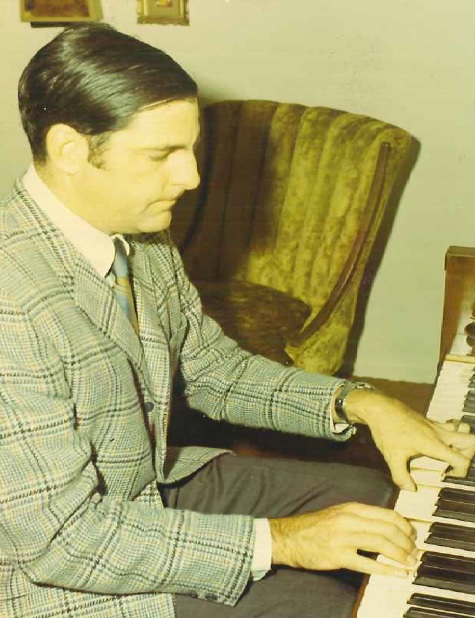
I was cleaning a few things out of my office today and found this picture of my father with who I believe are a couple of slat customers visiting the company, circa 1969. His initial job once he joined CalCedar was as the first Data Processing Manager (for you young'uns that's today's IT Manager or CIO) setting up the first computer system. It was an IBM System 3, with everything controlled by punch cards he'd create to develop reports and store data. I recall ladies in the office entered all the data from slat production and sales on these cards via keyboards and giant stacks of green paper printouts (about 15x20 inches) with perforated edges for tractor feed. I remember using one of these punch card systems in my first computer programming class in high school in the 1970s. The system took up a large percentage of the office space. That same office space, now remodeled is where I have my office today.

The 2nd picture below (also found today) is of dad playing the keyboards he really prefers around the same age. He's probably playing "Night in Tunisia", his favorite song. Just love the pants above and the jacket below. Dad went on over time to become President of both CalCedar and Duraflame and now Chairman of the Board of both companies. His computer keyboarding now is most often to pass along jokes and videos he finds interesting from the internet to friends and relatives, but he's still always sitting down at the piano with the same set list of jazz classics. I can't say his taste in clothing has changed much either.

Monday, August 05, 2013

Keeping A Road Trip Journal

Each year Ginger and I take a road trip together in August. This year we've headed North to Oregon and I decided to try keeping a road trip journal using one of the beautiful prompted journals from the Journals Unlimited Range we stock on Pencils.com. This is a great series of Journals, each promoted with relevant data depending upon the topic. There are both mini and normal sizes in a number of topics. All the notebooks are "Made in the USA" and use soy based inks as well so they are environmentally friendly. Would be a nice pairing with our ForestChoice pencils as a gift, but on this trip I'm using my Blackwings and trying out a prototype pencil case.

For this trip I selected the Journal entitled, Adventures, My Road Trip Journal. Each day's entry has prompts related to who you're traveling with, departure and destination points and stops along the way. There is a technical data section for keeping track of odometer readings, MPG, gas prices, total distance travelled, and the route taken. Also sections for noting highlights, sights and memorable places visited, where you ate and things to remember for the next trip. The back page is open form for notes and journal thoughts about the day. I'm using it to make notes of interesting things Ginger and I talked about during the ride. Also each year we listen to one or two books on CD, usually picking an old classic. This year's selection is Steinbeck's The Grapes of Wrath and I've taken to writing down a few thoughts of interesting passages we listen to that day.

Overall the format seems pretty helpful, though on a down driving day like here in Sun River for a few days the technical sections are less useful, though I did use an app to track our bike ride and there is plenty of space for writing about our wilderness kayak trip today and my fishing trip tomorrow.

Thursday, April 18, 2013

Introducing the Blackwing Pearl


Recently, our Palomino business unit announced the newest addition to our Blackwing pencil range, the Blackwing “Pearl”. Here is the first photo of the "Pearl" set to make it's official debut on May 2nd at Pencils.com and other dealers around the world. You can register for the Studio602 newsletter updates at Pencils.com for more information on just when the product will go live.

May also marks two years since we introduced our “602” model as a follow up to our first Palomino Blackwing pencil launched in October 2010. Since then, we’ve focused on building awareness and distribution for our two Blackwing pencil models, as well as our flagship Palomino and ForestChoice brands. This included introduction of a complementary range of high quality notebooks and sketchbooks. We’ve been pleased with the progress, as many of these three product ranges are now available in an increased variety of online and independent retail stores throughout the U.S. and Canada, as well as growing international distribution in Europe, Australia and Asia.

Over the past two years, we’ve received numerous requests for new Blackwing items from fans as well as our dealers and distributors. Many want new color combinations for the casing and/or erasers and others have made suggestions for alternative graphite formulations. We’ve also considered numerous requests for custom imprint services on Blackwing pencils similar to the custom imprint options now available on our traditional Palomino HB eraser tipped pencils.

One of our key concerns in introducing any additional Blackwing pencils has been positioning the new pencil for use when it comes to differentiation of the graphite performance. In the tradition of the original Eberhard Faber Blackwing 602 pencils, we’ve never published a specific hardness grade for our Blackwing models. When we launched our 602 model in 2011 we introduced the “firm and smooth” and “soft and smooth” descriptors to differentiate the new pencil from our original Palomino Blackwing in the black matte finish, which has a much softer, buttery feel loved by those doing a lot of sketching, music notation and other activities that require a dark mark. The “firm & smooth” 602 has been well received by those doing extended writing and note taking who want longer lasting performance between sharpening in a pencil that more closely replicates the original Blackwing 602 in performance, look and feel. Adding new grades and colors and keeping such graphite performance descriptors certainly foretells future taxonomy challenges and increases potential for confusion among consumers, so we’ve thought much about this before proceeding. In fact we've already had a few interesting suggestions from fans on coming up with our own Blackwing graphite grade scale to simplify things down the road.

Given that we already have a well-received graded graphite range in the Palomino brand, we’re not looking to replicate that by continuing to add a large variety of graphite grades in the Blackwing brand. In selecting a course of action for adding one additional grade we could have gone firmer than the “602” or even softer than the Blackwing, but we experimented with several options and looked at things within the context of our wider artist graphite range and decided to go for something in the middle to fit the broadest user base which offers about the same darkness of the 602, with a bit softer feel that still gives improved wear rates vs. the “soft & smooth” model. We’ve decided to call it our “balanced & smooth” formulation.

For the casing décor, we chose a completely new effect by adding a pearly luster finish to contrast with the flat matte black of the Blackwing and the gunmetal metallic look of the 602 model. White is our most requested color for lacquer finishes and we think it looks just great with this new finish style. Thus the combination of white lacquer and pearly finish lead us naturally to name this pencil the Blackwing Pearl. We chose a black imprint for a stronger contrast, which looks great with the black eraser combination. In fact, we think the Pearl will look great with all six of our available eraser colors, which allows for further personalization or “hacking” for those so inclined.

We can see the Pearl being popular for use in home office décor or used as great guest gifts in weddings and other special events, but also well received for a broad range of existing uses by our fans and new initiates. In reality, regardless of the many different uses of our Palomino or Blackwing pencils, the selection of any specific pencil is always a matter of personal preference. In that sense, we think there is plenty of opportunity for you to find the pencil that is “just right” for your individual taste or a specific need in different situations throughout our full Palomino family as it’s grown and adapted over the past two years. We hope you’ll try out the Pearl and continue to discover the great function, design and performance of our developing Palomino family of products that help you to express your creative spirit in new and exciting ways.

Thursday, February 28, 2013

Hough's American Woods: 141 Incense Cedar


This post initiates an extended project I’ve given long consideration to pursue on Timberlines. That is, writing more extensively on my long running interest in the study of natural history and in particular the history of early naturalists as well as the development of various scientific disciplines within the broad field of natural history.

One of the major influences in this hobby was my grandfather and namesake, Charles P. Berolzheimer, whose broad intellectual curiosity in the sciences, including botany, forestry, wood-machining among many other fields of study as well as my exposure to his extensive library which he developed over a lifetime of scholarship. Both during his lifetime and after his death in 1995 I was quite fortunate to receive from his collection a number of books which focused on the natural history topics I find most interesting. He was a unique individual, equally comfortable giving a technical speech on wood sciences in several languages, discussing art and enlightenment thinking or walking through the woods collecting and assembling his personal herbaria. He was particularly fond of trees and fungi. My access to this collection of books has spurred my own further research into these topics, sometimes in specific technical fields, but more generally focusing on the human side of the story of those individuals who advanced knowledge in particular areas of interest, the early field naturalists, discoverers, catalogers or researchers.

My first post in this series covers Hough’s American Woods. I’ve selected this work as a first post not so much due to Hough being an early pioneer of natural history study, though the scope of his work and focus on documenting physical wood samples of American tree species was indeed pioneering in many respects, but rather as this work strikes a bit closer to home for me with respect to the influences of my Grandfather and his interest in area relative to wood processing and treatment.

Hough’s work is a multivolume collection of wood cuts including the Transverse, Radial and Tangential section to show physical specimens exhibiting the natural character of woods, both native and introduced to North America, that he considered import to the study of forestry. The series in total includes 14 volumes and 350 individual species. Each volume includes both the section samples of 25 species as well as a bound pamphlet describing the individual species general and technical information as well as general information covering a range of topics from taxonomy, botanical identification of parts of trees and on the geographic area specific to each volume. The author, Romeyn B. Hough, personally supervised the selection of living tree samples of each species to assure accurate identification and production of the physical sections. The final 14th and final volume was published posthumously in 1928 with his daughter writing the pamphlet.

Given the broad geographic distribution of species extensive work required to identify, harvest and prepare these samples it’s not surprising the publication of this multi-volume work spanned from 1888 to his death in 1924. The specific care to assure proper drying, cutting and preservation of actual wood samples that would stand up without degrade now over 100 years later relates specifically to the technical study of wood chemistry and machining that my grandfather dedicated his own professional career to given our company's role in supply of wood to the Pencil Industry. American Woods is certainly a labor of love, which in his first Volume Hough dedicated to his own father, who in addition to his influence in Hough’s study of nature he also credits the original suggestion of the pursuit of the body of work covered in this entire series, officially titled, The American Woods, Exhibited by Actual Specimens and with Copious Explanatory Text.

Naturally of all the possible woods in these volumes I’ve chosen to feature sample number 141, Libocedrus Decurrens, or California Incense Cedar. This species is included in Part VI (published in 1895) which covers specifically woods of trees found growing in the Pacific Slope of the U.S. (a scan from my personal collection is shown) (today the Genus Calocedrus has commonly replaced the original taxonomy Libocedrus). Incense cedar first began to be investigated for pencil production around 1906 by our family members at the Eagle Pencil Company and produced commercially into slats at their Hudson Lumber Company mill. For more information on Incense cedar in pencil slat production, read here.

Originally, this collection sold for $5 per volume. Today a complete set including the 14th Edition sells for tens of thousands. You can see all the wood cuts from Hough's American Woods on line here.

Tuesday, November 20, 2012

I, Pencil - The Movie

Over the past year or so I've been providing some techincal advice and input to the Competitive Enterprise Institute (CEI) producers of a new video based on Economist Leanard Read's essay,  I, Pencil. I was in Washington D.C. a couple weeks back and met with them though unfortunately I missed thier launch party for the video presentation.  I've written about that essay before here.


The CEI has put together a nice website ipencilmovie.org that includes the movie and a supporting curriculum and many other resource links. So it's a great new resource for teachers wishing to give thier students a good introduction to some of the key economic concepts behind Read's essay.

We've agreed to do some cross links from our Story of Pencils pages over at at Studio602 on Pencils.com, to help build awareness of this new learning resource.


Friday, August 10, 2012

A Visit to the Brubeck Collection: Pencils Only Please

This week I’ve had the great pleasure of participating in several events hosted by the University of the Pacific’s, Brubeck Institute as part of their annual Summer Jazz Colony.  The Brubeck Institute was established in 2000 in cooperation with Dave and Iola Brubeck, both graduates of the University of the Pacific.  The mission of the Brubeck Institute is to build on Dave Brubeck’s legacy and his lifelong dedication to music, creativity, education, and the advancement of important social issues. 

The Summer Jazz Colony occurring this week is one of core programs of the Institute which brings in 18 of the country’s top high school jazz musicians for further training in music theory and performance with dedicated artists in residence and special guest performers and instructors.  Including Blackwing featured artist, Christian Tamburr.  Here’s a quick clip of Christian at his performance last Sunday at the new Take 5 Jazz Club, nearby the University and the Brubeck Institute.  The Wednesday Jam session I attended featured some very talented young musicians playing Brubeck songs and sit ins with instructors as well as special guest, another vibraphonist Stefon Harris

One of the special gems of the Institute is the Brubeck Collection, an archival collection of Dave and his wife Iola’s life’s work in music, international diplomacy and active leadership in the civil rights movement.  Iola, herself a playwright, collaborated with Dave on a number of projects.  About 20 Brubeck Insitute embassadors had the opportunity for a personal tour of the University’s Holt-Atherton Archives which house not only the Brubeck Collection, but also the John Muir Papers collection which holds about 75% of the extant papers of Muir.  Michael Wurtz, University Archivist, informed us of some fascinating facts on Dave and Iola’s lives and careers, and we got to see first-hand a number of these important letters, contracts, albums, marketing materials, music scores and more. 

One interesting fact is that Dave really couldn’t read and write music on paper himself much.  His creative, improvisational style just wouldn’t conform well to putting something fixed on paper.  When he did compose some of his more extensive orchestral arrangements his brother or another collaborator usually did most of the music notation.  We were shown one of the first pieces of music he wrote for a school assignment which he subsequently was told what he played was very good, but wasn’t what he had written.  Dave tore up the score and threw it away. A fellow student saved the pieces from the trash taped them together and later sent them to Dave as a memento.  Here's a link to one of Dave's scores a lullaby from 1941, though I could not find a digitized image for the torn score we were shown during the presentation.


Another important thing I learned was about Dave and Iola’scommitment to civil rights.  In fact, 1960 Dave once cancelled 23 of tour dates in a Southeastern states tour when the Universities they were playing refused to allow him to play with his racially integrated band or allow a racially integrated audience.  Here is an intersting letter Dave received on the positive impact resulting from one of the two Universities that did allow this integration to occur.  Also Iola’s and Dave’s musical “The Real Ambassadors”, which celebrates it’s 50th anniversary next month, addressed sensitive social issues as well.
Finally, I was very pleased to see the “Use Pencils Only” sign in front of desk of Special Collections Assistant, Trish Richards, shown in the photo above.  Certainly, they want to protect these one of a kind archival materials from any accidental ink spills; another important benefit of pencils over pens.  I don’t know if Dave and Iola have ever been Blackwing pencil users, but perhaps some time in the Archives exploring may turn up a photo or other evidence as to their preferred pencil brands.  I was able to leave a special gift of several dozen Blackwing pencils for the Summer Jazz Colonists and members of the Brubeck Institute.


Tuesday, July 24, 2012

A View to the Future of U.S. Pencil Manufacturing


My last post addressed recent news regarding allegations of illegally imported Chinese pencils.  In order to avoid anti-dumping duties these pencils were apparently transshipped via third party countries such as Taiwan, Vietnam and Indonesia and mislabeled as to country of origin.  Today I am addressing the overall U.S. market for pencils and future of U.S. production of pencils relative to how I see this topic coupled with other developing industry trends.

In my view, regardless of the final outcome of this particular legal case I believe this is a positive development for U.S. pencil manufacturers and other established pencil industry participants who are committed to making quality products and playing by the rules when it comes to all manner of international trade, environmental, labor and product safety regulations.  For the past 20 years the trends of globalization, retail channel consolidation and other competitive market forces have contributed to a dramatic shift in our industry structure just as in many other industries.  As a free market thinker I do not believe these are inherently bad trends and they have led to a number of benefits for society as a whole though those benefits may not always be evenly dispersed and has not always resulted in comparable product quality. 
When it comes to pencils, both here in the U.S. and worldwide, we are seeing more pencils sold and consumed at lower average prices than 20 years ago.  Despite the common misconception that pencils are a dying business, pencil consumption generally grows globally at or around the rate of population growth.  Also per capita pencil consumption tends to increase with income growth as well.  Providing we continue our positive immigration trends we should see stable and slowly growing demand for wood-cased pencils over the long term.  Obviously income growth and dispersion is a current concern in light of recent economic developments, but ultimately I still remain optimistic about U.S. potential from the macroeconomic stand point.

The rise of computers, tablets, or smart phones over this period have yet to prove to me that these technologies are going to displace writing instruments and pencils as a whole.  Technology certainly can impact how and where we use pencils at the margins. However, there is a strong emotional and tactile connection people have with their preferred writing tools and the physical act of depositing graphite, ink, paint or color pigments onto paper.  What could impact per capita pencil consumption even more than technology is allowing another generation of kids to be raised without access to and experiencing the use of good quality pencils. This could drive consumption patterns to alternate writing instruments in the long term.  Despite the benefit of ever cheaper wood-cased pencils on household budgets over the past 20 years , one negative byproduct has been exposing children, teachers and other consumers to a general reduction in the quality of the average pencil sold here in the U.S.  At Pencils.com one of our most common consumer questions is: “Where can I find a decent pencil at a reasonable price in which the lead won’t break, the eraser works without smearing and that actually writes well?”  Teachers often report that the simple act of more frequent breakage and sharpening has become a disruption in the classroom.

One complicating factor is the poor state of funding for education in the U.S., especially when it comes to the provision of basic school supplies. As a result the burden of supplying pencils and other suppliesis increasingly pushed onto teachers and families who have their own budgetconcerns.  The drive for ever lower prices has helped, but has also compromised quality and selection.  As a result the assortment of pencils on retailers’ shelves has declined and the mix increased towards imported private label or low price non-manufacturer brands.  Lower space allocation is offered to traditional quality manufacturer brands.
So what do a bunch of economic, social and demographic trends have to do with an illegal transshipment case and whether this helps the U.S. industry or not.  The question lies in part whether the retailers as a group, begin to see that price of pencils cannot be their sole determining factor in the product mix as there are other costs such as the associated anti-dumping duties and penalties.  Also will consumers take a greater interest in the quality and origins of their pencil purchases?  Sure they are still going to want the best price possible.  However, I tend to think that a supplier who is willing to illegally transship pencils is also a supplier who is more likely to cut corners in product safety and quality.. These are all problems the retailers and consumers don’t want to deal with over the long term.  If retailers increasingly find they will be held responsible for penalties, fines and consumer dissatisfaction as a result of the potential negative aspects of their product supply chain then they are going to increase their diligence in vetting and selecting their suppliers.  Certainly they cannot be expert in every product range they sell and as they are importing many products globally, the headache of assuring compliance on products with anti-dumping duties and other safety or regulatory concerns may result in some level of return for advice and supply to known domestic vendors for improved reliability.  This does not necessarily mean an imported pencil will be replaced by a domestically produced one, but the opportunity for engagement on that supply decision will certainly improve for the U.S. producers.

Further there are currently added economic trends that point towards some return to U.S. manufacturing in general.  My belief is this ultimately will have some positive benefits for the U.S. pencil industry also.  Labor costs in China are now increasing dramatically and though still quite low relative to the U.S. are making it difficult for many general manufacturing companies to find and retain qualified employees.  Chinese labor regulations as well as other environmental and bureaucratic regulations are beginning to impact the general cost of doing business in China.  This first impacts those producers in China who play by the rules, but in time the effects should spread further throughout the Chinese economy. Meanwhile, U.S. domestic energy costs are declining with the increase in domestic gas exploration and development.  Long lead times on overseas supply chains complicate planning and inventory investment while domestic producers can often be more flexible with quicker response times. 
Another important concern within the pencil industry is that Chinese basswood and other Chinese woods have come under pressure for use in other domestic purposes.  More wood is coming from Russia which has less stringent regulatory oversight causing more concern with legal wood supply issues.  A resurgence in total Chinese GDP growth from their current slowdown will have further inflationary impact on global wood supply and thus eventually pencil prices as well.  In my personal assessment we’ve seen a low point reached in global wholesale pencil prices that was reached about two or three years ago.  There will always be some other part of the world, the next low cost country, to move on to, but adequate quality wood supply and transportation costs also have an important impact on pencil economics beyond labor costs and regulatory environments.  Overtime, the developing world catches up in relative costs so the U.S. should be able to adapt and innovate to remain competitive.  That is as long as we do not let our current political stagnation and increasingly burdensome regulatory environment overwhelm us over the long term. As the U.S. remains one of the most important global growers of trees this ultimately will have some positive impact on a host of products manufactured from solid wood.  As a result I do predict that we will eventually see at least some small improvement in U.S. production of pencils and other wooden products over time.

In our own business at California Cedar Products Company we are certainly not prepared to return our slat manufacturing operations to the U.S.  However, we are increasing our commitment to U.S. based wood supply with the recent introduction of our Pacific Albus product range.  Eventually we expect this will be an increasingly relevant component of our business displacing Chinese and Russian Basswood and supplementing our premium California Incense-cedar product range. 
Additionally, we have recently made several small movements towards U.S. production regarding our Palomino Brands pencil ranges.  Recently we relocated the final eraser tipping process for our Palomino Blackwing and Blackwing 602 pencils from Japan to our Stockton, CA using a newly developed tipping process.  This should improve tipping quality and responsiveness as demand for Blackwing pencils grows.  Thought the pencils themselves will continue to be produced in Japan.  Also, we are transitioning our Prospector and Golden Bear products from Thailand production to the U.S. where we are working with one of our slat customers Musgrave Pencil Company to produce these items. The new “made in the USA” versions of both pencils will phase out our prior California Republic versions and be available exclusively on Pencils.com in the coming weeks.  These pencil items represent only a very minute segment of the U.S. pencil market, but do expand our commitment to offering a “Made in the U.S.A.” product selection in our Pencils.com store.

Wednesday, July 11, 2012

Allegations of Illegal Chinese Pencils

U.S. Pencil Anti-Dumping Duties are news once again as a result of new developments with regards to alleged transshipments of pencils produced in China via third countries to avoid these duties.   Despite the imposition of such duties since 1994 there has been a steady increase in imports by retailers and wholesalers most importantly from China, but also Indonesia, and numerous other countries over the past 20 years.  To maintain competitive through out this period much of the traditional volume supplied by U.S. pencil manufacurers has migrated primarily to Mexico and Asia, particularly the largest U.S. producers.

In effect, the large retailers and a new class of importers and distributors have significant increased importance to overall US pencil supply using lower cost imports by bypassing the historical U.S. producers. Today U.S. manufacturers now use a combination of U.S. production, foreign production in their own subsidiary facilities as well as outsourced production from third party foreign suppliers to meet thier customers needs. Only a very few maintain all their production within the U.S.

Today I estimate that less than 10% of U.S. pencil consumption consists of pencils actually manufactured in the United States.  Certainly the actual market share of the traditional U.S. producers is much higher when factoring in production imported from their own facilities in Mexico or China plus what they import from other foreign producers.  Perhaps 50% of the U.S. market today are pencils imported directly from China, despite the anti-dumping duties of 114% levied on Chinese pencils since 1994.  Most of these direct Chinese imports do not pay the full anti-dumping duty given that provisions under the statutes allow for a review process with the U.S. Commerce department that results in reductions in these duties applicable to some Chinese producers/exporters.  However, the review process is expensive and only the largest Chinese producers that export to the US participate.  As a result it has been long suspected that there also have been a substantial number of Chinese produced pencils being illegally transshipped via third countries to avoid these duties.  Suspecting and proving such transshipments however are separate matters. 

Now for the first time since implementation of the duties it was made public in May that there is an active civil case proceeding against several large U.S. retailers and importers for participating in the importation of illegal transshipped Chinese pencils via countries such as Taiwan, Indonesia and Vietnam.  This case was filed in 2008 by the Cullen Law Firm in Washington, D.C. per the this press release published May 17, 2012.  The public docket was made available May 1st.  Note that at this time these remain only allegations, but if the case prevails there are substantive fines and penalties that would be accruing going back to at least 2006 as it’s not just the transshipment to avoid duties that is a potential violation, but also incorrect marking relative to country of origin laws as well. 

I have now had the opportunity to review the actual Docket Report from the U.S. District court which was formally unsealed on May 1st of this year.  Certainly the details of the allegations in these documents seem well researched and argued and are consistent with rumors of various transshipment practices I’ve heard throughout the years.  The Cullen law firm seems confident in their press release.  In the event the case is successful it appears that the the Cullen firm and their client will benefit financially receiving a share of the duties and penalties collected with the balance returning to the U.S. Government which remains an interested party to this case. 
There is also the matter of whether the defendants were knowingly or unknowingly participating in this practice.  My understanding is that the burden of proof on that point is not as relevant in a civil case vs. a criminal case and that may be the rub.  The plaintiff just has to prove the illegal transshipments occurred.  Whether these companies knew they were illegal transshipments doesn’t really matter.  If proven true, clearly the drive for ever lower procurement costs from these retailers will have played a part in supporting the illegal behavior facilitated by thier suppliers in one way or another.  As the importers of record they are potentially subject to the back duties and penalties and as these appear to be rather substantial I assume this case has definitely got their attention and hopefully the attention of other pencil importers.

Finally, from what I’ve learned about the case to date none of the traditional U.S. pencil producers appears to be actively involved as a plaintiff, nor has any been named or identified as a participant in any of the alleged transshipment activities.  In my experience the U.S. Industry participants have always supported “playing by the rules” and indeed several companies were involved as plaintiffs in the original anti-dumping case.  In that respect they helped set the current rules.  Even if some  of these U.S. producers may have relocated much of their own production overseas, they have long been active in assuring that their own imports of finished goods and raw materials are fully compliant with applicable U.S. trade law as well as all relevant consumer products safety regulations, etc.  While the U.S. Writing Instrument Manufacturers Association and it’s Pencil Section have taken no public position on this case, my personal view is that these member companies (of which ours is one) are watching this case with interest and hope that whatever the final ruling it will have some form of positive impact for all of those companies in our industry, foreign or domestic, that play by the rules.
So what does this all mean for U.S. pencil manufacturing?  If proven true, what changes will these defendants and potentially other retailers and importers make in their practices and supply chain structures to address potential risks brought to light by this alleged activity.  Will it benefit U.S. manufacturing or just redistribute purchasing to other foreign manufacturers?  What other market forces are currently at play that could impact the trends regarding the future of U.S. pencil manufacturing?  I’ll address these questions in my next post in just about two weeks time. In the meantime here's a link to a collection of my past posts on international trade issues related to the pencil Industry.

Friday, June 08, 2012

Ode to Blackwing Animated Version


Today marks the 1 year anniversary of the introduction of our Palomino Blackwing 602 pencil for sales on Pencils.com.  It's been a fun first year with alot of positive developments, including most recently our original Palomino Blackwing pencil being featured in an upcomming movie.  But today is really about poetry.

Yesterday was also the first anniversary of my original post "Ode to Blackwing", my rather hokey attempt at a poetic tribute to the history and revival of the Blackwing pencil and the process of responding to customer feedback to create the later Palomino Blackwing 602 version as we introduced it.  Today we have just released the Animated version of "Ode to Blackwing".  This video was produced as suprise to me for the Blackwing Experience event in New York back in April.  It was playing on an animated loop at the end of the historical timeline on the pencil industry. A few lines were modified by our creative team from my original version and the voice of course is not mine.  Thanks to Cartoonist Gary Kopervas for collaboration on this project.  Hope you enjoy.

As we are celebrating Literature and Poetry as our theme on the Studio602 blog this month and yesterday we launched our Pencils.com Poetry Slam contest I thought I'd share this video for a bit of inspiration.  Hope you'll enter by June 19th for a chance to win a great giftset. 

Friday, April 13, 2012

Dear Sean

To my readers:

I find myself in the distasteful postion to publish the following letter, which in my view should be a private communication between Sean Malone, the Publisher & Editor of Blackwing Pages and myself. Unfortunately, the increasing intensity and method of his campaign against me and our company and now the additional posts of a couple others which appear to have jumped on certain of his themes, have now crossed a line where I feel some public clarification is required. Given Mr. Malone's approach to date, I felt it best to publish the entire letter and let you decide for yourself. I realize by publishing this letter I am opening myself up to further criticism and to further parsing of my intentions to fit the purposes of my detractors. I have always prided myself on my overall transparency. I could have approached Sean sooner to address his claims, but it has been unclear by his actions to date that any earlier response or even this letter will do any good. I hope it will, but who knows. Then again neither Mr. Malone, nor anyone else who has been critical, has ever bothered to directly contact me or my team these past few months to address their greivences. I have also just responded over at Pencil Talk to a new post on related topics to furher clarify certain questions asked today.


April 13, 2012

Sean Malone, Publisher/Editor
Blackwing Pages

Dear Sean,
In the last three months you have devoted a great deal of energy to not only criticizing the marketing efforts around our Palomino Blackwing pencils, but more recently to calling into question my personal integrity and the reputation of our company. Now you’ve apparently enlisted others in your campaign. I am honestly startled as to how we got to this point. In my acknowledging an inadequately vetted claim about Frank Lloyd Wright’s use of a Blackwing, it seemed that we were both interested in documenting as available the history of the Eberhard Faber Blackwing 602 and the following it engendered. Prior to that event, I felt we have had a long, positive and mutually supportive relationship where you had willingly provided various images, sent us music scoring sheets for promotional photography purposes, etc. and had never expressed any sentiment that you were dissatisfied with the manner in which we may have utilized any material from your blog. In fact in our e-mail ommunication of Jaunary 6th after the whole FLW affair, I apologized again personally to you for our faux paux and invited you to be an active participant in our planned Blackwing Experience event to help us get the facts right. You indicated you had nothing against me personally nor were you trying to assert some moral high ground on the issue.

You also politely declined my invitation to participate in the Blackwing Experience event, which I have fully respected. As such, I directed our team to work on our own historical research elative to prior users of the Eberhard Faber Blackwing and to provide appropriate attribution for source materials. We have done just that. In fact, our “Blackwing in Pop Culture” page on our recently published Palomino Brands website lists sources for each Blackwing user mentioned, lus includes a link to a bibliography page. None of these reference your work as they have done independent verifications, respecting your wishes not to be associated with our endeavors.


We have also reached out to a number of users, and families of users, of the original EF Blackwings with very positive and supportive results and continue to focus on that effort. In fact, the grandson of Chuck Jones, head of one of the many estates of former users who support our efforts, extended his appreciation personally for us bringing back the Blackwing because it was such “a huge part of what Chuck was able to accomplish”. He will be a participant in our panel discussion on Creativity and what it means to pick up a pencil in the digital age. An invitation I ould have gladly extended also to you, but again, you declined any involvement. We have the upport of not only Mr. Jones’ estate, but as I understand it from the estates of Nelson Riddle and ohn Steinbeck, among others. Stephen Sondheim himself is a fond user of our Palomino lackwing pencils and has voiced his support of our Blackwing revival publicly in his book and privately, as well as of the upcoming Blackwing Experience exhibit in New York. We are expecting a very informative Blackwing Experience event in New York that both honors the reative legacy associated with the Eberhard Faber Blackwing 602 pencil as well as brings to the forefront the talents of the fans of our new Palomino Blackwing generation of pencils.

In recent weeks, however, since our last private communication in early January, the frequency and intensity of your posting activity has increased, as has the series of ever-critical posts and attacks on both me and CalCedar. You have parsed the language used in our communications to fit your arguments and challenged nearly every new piece of information we have put out about Blackwing pencils or the upcoming event. Your invective has now bridged the gap to calling me both a thief and a liar and to attacking the integrity of third parties, Justin Oberman and The Art Directors Club. On that latter subject, we are advised by counsel that the fleeting use of your picture of pencils in the documentary and enlightening video on pencil sharpening was well within fair use rights by video’s creator. I never saw that piece before it was published as it was a project between other parties; though I now see we were given a credit as “Palomino Presents”. Had I seen it, I would have immediately recognized your photo and suggested it be changed to one we could happily provide, and in fact the offending photo has since been replaced. However, I am probably the only one who would have recognized that photo as coming from your blog as with most other historical material on Blackwing Pages. Our day to day team has simply not been referencing Blackwing Pages since early January, until your recent aggressive posting activity against our company has necessitated such visitation to assess your claims.

There seems no substantive reason for your harsh treatment of Justin, except for his association and collaboration with our company on the upcoming event, and perhaps that you feel he has not apologized to you for accidental use of your photo. Likewise, your statements about me and CalCedar have now become defamatory. If you feel we have “stolen” anything from you or take issue with anything else, please feel free to contact me directly and privately, and I give you my personal assurance that I will investigate specific and clear claims you may have. I am open to considering that there may have been one or two places we could have erred since the FLW issue, I understand a couple factual errors were corrected when brought to our attention, but your claim that this is somehow evidence of some underhanded strategy or theft on our part is ludicrous. You have not once shown the courtesy of communicating such specific concerns directly to me in all this time, preferring instead to use your blog as bully pulpit. However, public and potentially libelous charges through your blog seem inappropriate and counter-productive to the support that the original Eberhard Faber Blackwing 602, our new Palomino Blackwing models and all pencils in general deserve. I stopped commenting on your blog because you told me you didn’t want any association with our efforts and because your attacks indeed became personal and morally based contrary to your communication to me on January 6th.

Sean, I don’t expect you to agree with me on the marketing approach to CalCedar’s business, and indeed there are other protectors of the original Blackwing product. You are entitled to your opinions on these subjects. We have never claimed we are producing an exact replica of the Eberhard Faber Blackwing 602. It’s impossible to do so in my opinion. We are trying to do the best we can to produce a modern successor and build a new following for our Blackwing pencils, as a premier writing instrument, one that honors the creative tradition of the original pencil and its users. Those values are inherent in the Blackwing brand whether printed on an Eberhard Faber version or a Palomino version. It is your prerogative to rail on these efforts, but the increasing move towards outright defamation is simply inappropriate. Hopefully, we can discuss and resolve these issues reasonably and move on. I hope you’ll agree there are more important things we can both be attending to in our lives.

Regards,

Charles Berolzheimer
President

California Cedar Products Company