Thursday, October 06, 2005

Woodchuck: The Pencil Pusher

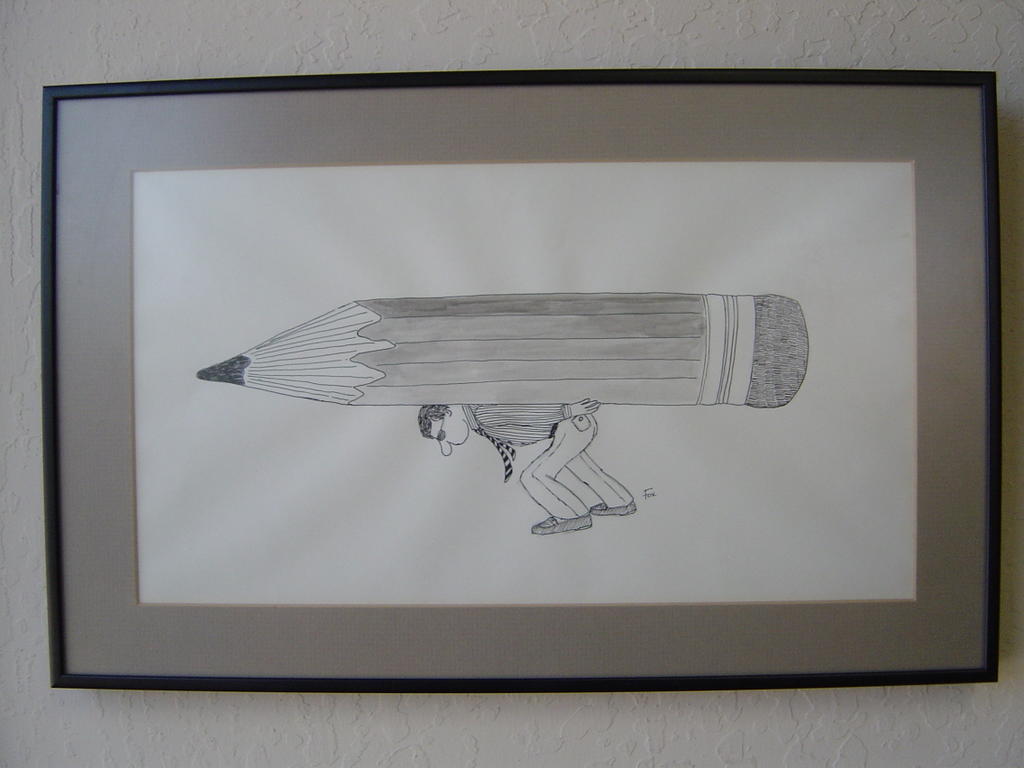
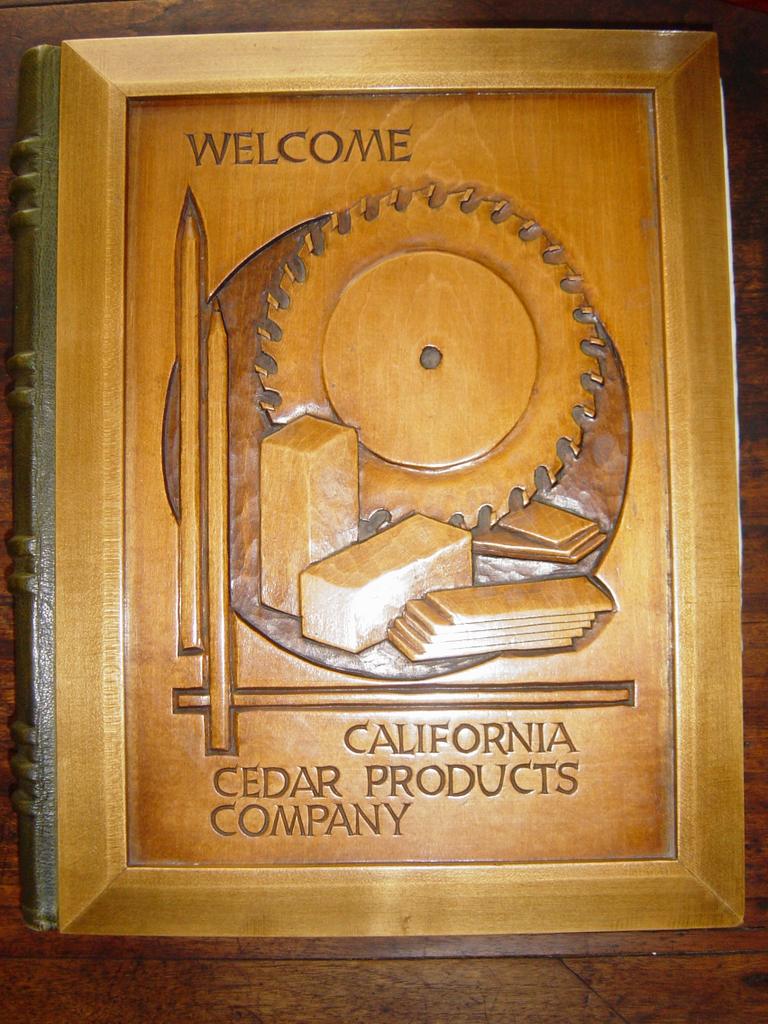
Note: The drawing shown here hangs in my office and was a gift to my father by a waitress/artist who once served him and the owner of one of our customers from Mexico, Lapicera Mexicana during a dinner in San Diego. She thought it was novel to come across interesting people working in the pencil industry and drew this for my father and mailed it to him later.


Last week I was visiting with a longtime friend and personal advisor discussing developments in our business as well as my recent extracurricular activities with the Timberlines, our new Pencil World Creativity Store and my Flickr site. She later checked the sites out and thought the whole WoodChuck, the pencil pusher alter ego was a hoot and provided me an interesting new outlet for some of my creative energy.

The reality is it's a challenge running a global business with international sales and operations in several time zones in our competitive industry. This alone is quite a bit before throwing in the added efforts of keeping up a new blog on the industry and starting a new online sales effort for our fledgling California Republic product range. As I hit extremely busy periods with the day to day work like we're currently in now the picture here seems increasingly appropriate.

Unfortunately correlating with such busy periods is a reduced frequency of posts on the Timberlines. It's not that there isn't lots to do and cover here on Timberlines, I actually have a long list of topics I have plans to cover down the road, just need to balance that with the everyday pencil pushing. I'll do my best to keep at least one meaty post going once a week.

Anyway I'd like to thank those of you continuing to visit Timberlines and especially those that have supported our Palomino launch thus far, particularly our friends via the Pencil Revolution.

Now back to Halloween planning.

Tuesday, September 27, 2005

Incense-cedar: A Growing Resource

The second in a series of posts on California Incense-cedar, its historical and current use in the pencil industry; it’s conversion to pencil slats, finished pencils as well as other products; and important aspects of it’s growth and management as a timber resource in U.S. western forests. My last post covered the key reasons for the transition from Eastern Red Cedar to Incense-cedar as the premier wood species used for pencils. Today I deal with the growth and abundance of Incense-cedar in our forests.

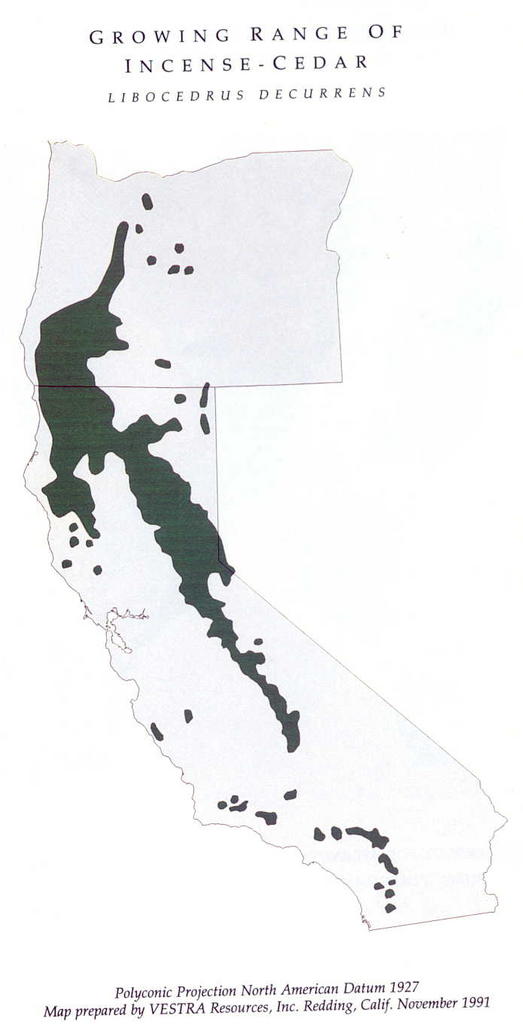
Incense-cedar is a hearty, drought-tolerant species that grows in a variety of soils in abundance throughout it’s natural growing range of the inland forests of central and northern California (as Calocedrus decurrens) and in southern Oregon (as Libocedrus decurrens). Though widely distributed in elevation it flourishes within the 2,000 to 6,900 foot (610 to 2,100 meter) elevation range.

Unlike species that occur in groves, Incense-cedar can be found scattered among Douglas-fir, Jeffrey Pine, ponderosa pine and other species that dominate the mixed-conifer forest. Within the state of California, Incense-cedar generally comprises about 5% of the trees in a stand while just 1.5% in it’s southern Oregon growing range. Despite it’s popularity in a range of uses, Incense cedar has never become a mono-cultural plantation species as with other commercial western softwoods. As a prolific seed-cone producer it readily regenerates and proliferates throughout it’s growing range aggressively repopulating any available site on the forest floor. It’s germination and survival rate are excellent relative to other softwoods.

Given historical tendencies to manage for more commercially desirable species on private timberlands the greatest abundance of Incense-cedar is found on public timberlands in our National Forests. However, due to it’s aggressive growth and increasing trends towards selective harvest methods and multi-layered forest canopies, Incense-cedar has experienced a growing importance on private timberlands in second and third growth forests. As a result there is more Incense-cedar growing in California forests today than at any time during the past 50 to 70 years based upon data from the US Forest Service mandated Forest Inventory and Analysis Project.

Despite the strong natural regeneration of Incense-cedar and the fact that it is not typically considered one of the more important commercially managed species, managed reforestation of the species is also practiced by both governmental agencies and private interests. In California and Oregon there are numerous nurseries which grow Incense-cedar saplings for reforestation purposes. Significant research has also been carried out on such issues as genetic diversity, adaptability, insect resistance and survivability with respect to Incense-cedar. The application of the knowledge gained through years of research assures improved forest health and a continued sustained availability of Incense-cedar.

My next post in this series will cover the specific regulatory issues for National Forests and within the state of California that provide further support to assure Incense-cedar and other western species remain part of a healthy, sustainable, diverse and multiple use forest ecosystem.

(Note: Most of the information for this post was sourced from “A guide to Incense-cedar” published in 1992 by P&M Cedar Products, Inc. following extensive research into a wide range of data and information resources about the species.)

Wednesday, September 21, 2005

Why Incense Cedar?


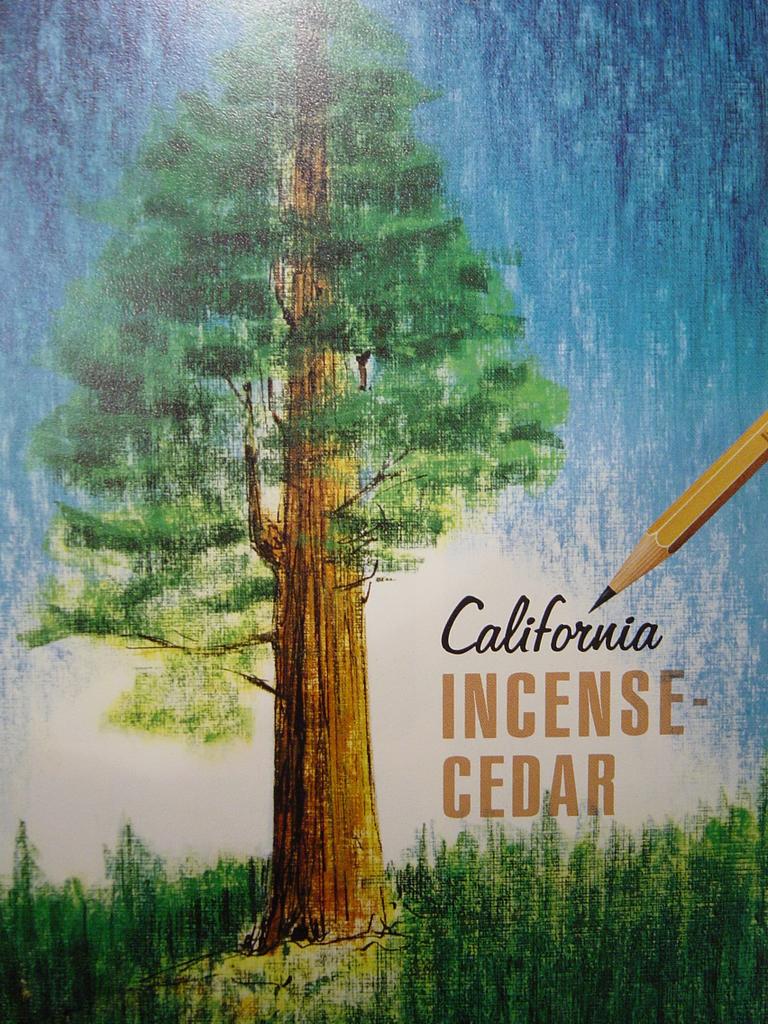
Note: This color pencil drawing of a California Incense-cedar tree comes from the cover of one of our California Cedar Products Company brochures dating to the early 1960’s. The artist is unknown.

This post is the first of a new series dealing with Incense-cedar, its historical and current use in the pencil industry; it’s conversion to pencil slats, finished pencils as well as other products; and important aspects of it’s growth and management as a timber resource in U.S. western forests.

Our company California Cedar Products Company founded in 1919 has had the unique position of playing a leading role of the development of California Incense-cedar (Libocedrus decurrens or also known as Calocedrus decurrens) as the premier wood species for high quality pencils worldwide. As alluded to in a recent post at the Pencil Revolution, Incense-cedar originally began to be used as a substitute wood for Eastern Red Cedar (Juniperus virginiana) which was the premier wood for US produced pencils and some European pencils dating from the mid 1800s through the early 20th century. It is commonly thought that the main purpose for the shift to Incense-cedar was due to dwindling supply of Eastern Red Cedar and there is some relevance here, but primarily from a comparative economic standpoint only. ERC is still widely used for commercial purposes today for products which most benefit from the technical characteristics contained in the natural cedar oil extractives of this species. Products such as closet lining, shoe trees, coat hangers, storage chests and natural oil extractives used in the essential oils industry for perfume and other cosmetic and scent purposes.

So what is the full story for the transition to Incense-cedar? First, western forests represented the largest unexploited wood basket in the United States and the superior growing conditions for softwoods and larger diameter of trees and increasing investment in western forest utilization during this period lead to the lowest cost of timber coming from the west. So from the first respect California Incense-cedar was less expensive than Eastern Red Cedar which was experiencing increasing prices as tree diameter sizes declined as increasing proportions of harvest came from second cut vs. “old growth” timber. However, economics of timber cost alone do not fully explain this transition. There were plenty of other species in the western US more plentiful and of lower cost to process, but none of these succeeded as a major pencil wood. In fact, even Incense-cedar pencil slats met initial resistance in the pencil industry and needed to be stained from it’s natural light blonde color to a deeper reddish-brown to match the accepted color of Eastern Red Cedar.

The real story lies in the technical properties of Incense-cedar which make it uniquely exceptional for use in pencils and various other applications. First, Incense-cedar exhibits optimal physical characteristics for close-tolerance, precision machining that make for very smooth machined surface and exceptional sharpenability in finished pencils as well as allowing optimal wood utilization from saw log, to pencil stock lumber, pencil slats and then into pencils. Additionally, it’s thermal conductivity rating or (K factor) is among the best for all softwoods. This provides dependable, predictable insulating properties and resistance to heat migration which positively impact performance of the species under machining conditions as well as gluing and drying.
As one of the most stable wood species Incense-cedar also stands up to wider variations in temperature and humidity without warping, checking or shrinking. This allows for tighter size tolerances and easy shipment to and use of cedar by pencil factories in many regions of the world where there are varying climates. Finally, the smoothly machined surface and relative lack of resin canals and pitch pockets assure that cedar pencils can be easily painted or stained with lacquer or water based stains to a fine, smooth finish without bleeding or other problems.

Beyond the timber economics and natural technical characteristics the final key factor in the success of Incense-cedar was the dedication and commitment of a small group of pencil slat manufacturers lead by CalCedar. This group focused their businesses uniquely on the production of high quality product, consistent and reliable supply and service, and technical development and leadership which increased yields and lowered total costs of production. By specialization just in production and sale of slats with a higher quality raw material coupled with continuous improvements in technology and finished product eventually most pencil companies eventually discontinued slat operations and began purchasing their slats from dedicated slat manufacturers. Pencil companies that had typically been vertically integrated with their own slat operations learned that they were able to improve their own business focus, finished pencil quality, operating economics and use of working capital by focusing solely on pencil production. In some cases the working capital and other economic savings were reallocated towards implementing production and supply of other writing instruments or complementary products to their distribution channels for pencils.

These were the major factors that lead to the leadership position of Incense-cedar as the premier pencil wood species in the world today. Of course times and market conditions change over time and there are several other wood species that have also become important in the pencil industry these days. This topic will be addressed later in this series. However, my next post in this series will address information regarding growing conditions and forest management policies that assure that Incense-cedar remains a plentiful and well managed species assuring a sustainable long term supply for a wide range of uses.

Remember to look for the Cedarmark which indicates use of Genuine Incense-cedar wood from California Cedar Products Company.

Thursday, September 15, 2005

The Chinese Pencil Industry & World Reaction: Part 2


My last post covered some of the competitive developments in our industry as a result of the large growth in the Chinese pencil industry.

While I mentioned that about 52% of the world’s pencils are now produced in China, the reality is that the Chinese share has grown to this level from about 22% in 1990 and 37% in 1995.
When you consider that China also exports pencil slats (including our own company’s product) the Chinese production share of wood or alternate material for pencil casings is much higher than pencils alone. Similar conclusions also apply for other pencil input materials such as graphite cores, ferrules and erasers. To a large degree the US pencil industry (and other countries) itself has become more one of “Assembled in USA” vs. “Made in the USA” although the legal definition of “Made in the USA” as applied to pencils is a technical matter in itself best reserved for a future Timberlines Post.

There are two key trade policies in China that seem to support Chinese producers to achieve their increasing advantage in world pencil industry. The first is the treatment of Value Added Tax (VAT) in terms of a VAT rebate that exported products receive. All goods sold within China are subject to a 17% VAT tax which is not dissimilar to many countries that impose VAT taxes. This applies to raw materials, labor and other services and inputs into the manufactured good. However when these goods are exported into foreign markets, the exporting manufacturer often receives a rebate of up to 13% of the export value. This in essence becomes an export subsidy to the Chinese producer.

In the past two years these VAT rebates have been eliminated on certain intermediate products such as our pencil slats while they have been retained or only slightly reduced for finished goods. In our case it made our pencil slats sales to our customers around the world more expensive due to the elimination of a rebate originally calculated into our cost structure. This simply adds further incentive and competitive pressure for foreign pencil companies to displace manufacturing to China. Unfortunately, such changes have the counter point of demonstrating inconsistent or changing rules that can serve to deter the foreign investment it is designed to attract. Such changes get lumped together with other concerns about unequal application of safety, tax and environmental regulations to foreign owned companies in China vs. local Chinese companies.

Finally, the pegging of the yuan to the dollar previously mentioned in a prior post has made Chinese pencils and other goods increasingly competitive with pencils produced in other parts of the world. This has also contributed to the growing imbalance of trade with China in many products including strengthening the Chinese pencil industry world market position. Recent efforts to begin slowly relaxing these constraints towards a floating currency will increase the relative costs of Chinese exported pencils, but you can be assured this is an issue the Chinese government will manage in a careful controlled fashion for the ultimate benefit of their own country.

Given these many issues, practices and policies I don’t expect an end any time soon to efforts by pencil companies throughout the world to take actions they view as helpful to their ultimate goals. The challenge for the world’s pencil producers, whether Chinese or otherwise country remains how do we continue to evolve our business strategies, products and practices in a profitable manner that works to our own competitive advantage. There certainly may be common issues and industry standards where collaboration is a benefit to the industry as well as to the ultimate consumer as a whole. However competitive differences will likely always exist.

Tuesday, September 13, 2005

The Chinese Pencil Industry & World Reaction: Part 1


The third in a continuing series of posts on international trade issues affecting the pencil industry.

My earlier posts focusing on pencil Anti-dumping duties provided first, a primer on the purpose and structure of such duties, and next an update on current developments on US anti-dumping duties against Chinese pencils. Anti-dumping duties in the world wide pencil industry are singularly focused on Chinese pencils.

As we’ve seen in order to protect their domestic manufacturing industries from what is perceived as unreasonably low priced and perhaps as unfair competition from China many countries have implemented dumping duties. My own experience is that many producers in the Chinese pencil industry don’t always seem to understand or agree with the justification for such anti-China trade polices. I have spoken with key Chinese managers who reflect a shared point of view that the Chinese pencil industry is not very important in the world picture. They complain that the growing number of small pencil producers who compete only on price, make the Chinese industry as a whole unprofitable in their domestic market.

As a result many Chinese producers look to the export market for higher value added opportunities. However they themselves don’t always feel they get a fair chance to compete with the world’s major brands. They complain they are expected to offer a significant price advantage to branded producers elsewhere in the world. They are left only with lower value OEM sales to existing brands or private label opportunities to foreign retailers for market entry. Some hold the view that to overcome the high import duties on their pencils they must hold their prices down to negligible levels. Thus further perpetuating demands for anti-dumping duties on Chinese pencils by producers in foreign markets.

In response to these pressures a small minority even resort to illegal practices such as counterfeiting western brands in the Chinese home or other third world markets. Some even purposely mislabel country of origin and transship via third countries to avoid these duties. None of these activities reflect positively on the Chinese industry as a whole since it’s often difficult to establish who the manufacturer is when they are producing private label products.

So when both Chinese and foreign pencil manufacturers often cry foul, where does the truth lie. As usual it’s somewhere in the middle.

The Chinese pencil industry currently produces 9.8 trillion pencils per year based upon the 2004 statistical data. Of these pencils about 80% are exported throughout the world with the US being the single largest market and the EU second. By our industry estimates Chinese pencils now represent over 50% of the world’s pencils on a volume basis. So it’s clear that the Chinese Industry is no small, unimportant player when it comes to pencils.

What of Chinese complaints about low price expectations of foreign buyers? It’s true Chinese pencils are on average the lowest priced pencils in the world as is their cost structure. This is why large distributors and retailers like Walmart, Target and others have set up their own purchasing offices in China to play one producer off against the other during their annual purchasing programs. Often Chinese export prices realize just one-fifth of the retail prices ultimately paid by consumers. What Chinese producers fail to realize however is that such practices still provide them access to major world markets as these large retailers’ work to replace or devalue traditional brands in their home markets.

The intensity of such competition for their traditional markets naturally drives a range of reactions from branded producers worldwide who have invested decades and in some cases centuries into building their brands, markets and distribution networks. One reaction is certainly to lobby for protective measures from their local governments, but the majority of reactions are market focused. Pencil manufacturers worldwide have focused on driving their own cost structures down, placing further pressure on their suppliers as well as looking for more value added products to produce and market. Some in the industry (such as our own company) have even taken to eliminating their home market production and have invested in their own Chinese facilities or relocated to other low cost countries. Some simply now buy their pencils produced to their specifications from Asia.

Finally, another problem is that given the common perception that pencils are simple easy products to produce and Chinese pencil manufacturing equipment can be acquired for a relatively low investment there has been significant new entry of capacity in the past ten years. Today there are over 200 pencil manufacturers in China alone, while the rest of the world has perhaps 100. Often local rural government entities in China will support or even participate in such investments hoping to build up their local economy. Local officials in some cases even look the other way when it comes to safety and environmental compliance regulations.

Given inexperienced management or technicians in some such companies producing a good quality product is difficult and differentiating on anything other than price nearly impossible. Some of these companies cannot and may never be profitable, yet somehow they survive from year to year adding capacity onto the market and holding prices down. So though some old large scale state owned pencil factories in China have closed in recent years due to their higher social cost structures, such behaviors do not indicate to many countries that there is a true market economy developing in China or that dumping of pencils is not occurring.

Clearly there are challenges for both Chinese and traditional brand manufacturers around the world. As price competition has intensified due to pressure from increasingly powerful retail distribution channels, pencils have been increasingly commoditized. While consumers may have benefited some from lower prices, the typical Chinese pencil though improving in quality over prior years still represents a step down in quality from the average quality of product previously available in western markets. Those who achieve the best combination of cost control while maintaining and improving quality and finding new value added products and services to differentiate their business from the pack will come out on top.

My next post tomorrow evening will cover the two key trade policies in China that work to support Chinese producers to gain advantage in the world market.

Monday, September 12, 2005

Ironbound Reflections


It has been since prior to the Labor Day holiday that I focused on adding much of substance to the Timberlines other than last week's quick addition of my Guestbook. Not the sort of thing one should be doing when just starting out on a new endeavor such as this if I want to build any regular readership. Unfortunately, some business and a few private matters have interceded and in reality sometimes you just need a break.

Truth is, I haven't even thought about Timberlines for nearly a week until returning today from a family wedding on Ironbound Island located in Frenchman's Bay near Bar Harbor, Maine. The world sets a different pace on Ironbound as my photo implies. An idyllic setting for a few reflective days following what has been a difficult few months due to my wife's serious illness this past summer. Now that things are improving with her health it was great she was able to travel to attend her cousin's wedding, reunite with her family and relax in such a wonderful natural and historic environment.

Electricity based only upon solar power, water heated by copper pipe bypass through the kitchen's wood burning stove, old fashioned kerosene lanterns, etc. No computers, TVs or telephones. A run down old jeep or two only for hauling supplies around the island. Just the place a wood cased pencil fits right in. I even took the opportunity to do a few quick sketches for the first time in ages. Not great, as compared to some of my photos which I have added to my Flickr page along with a few drawings of our Ironbound weekend.

Ironbound Island has however been an inspiration for real artists within the past hundred years or so. Lifelong Artist Dwight Blaney of Boston established his family summer home there in 1892 inviting family, closest friends and fellow artists as noteworthy as John Singer Seargent. Still maintained as a family retreat the island has been preserved in its natural state and permanently dedicated to non-development except for a few family residences. Dwight Blaney's water colors and paintings are a lasting portrayal of the quite reflection and repose of the Ironbound that thankfully still exist today. (Note: Blaney's painting "Ironbound Island, Maine" shown in the link provided depicts the same farmhouse as that in the background of my photo) What a treat to have been a part of this wonderful family event in such an amazing place.

Thursday, September 08, 2005

Timberlines Guest Book

Given the 40 or so years of history at the CalCedar research department there were quite a few guest books filled. None more appropriate than the one I have photographed here to initiate my own Timberlines Guest Book.
Prior to relocation of our manufacturing and our main technical capabilities overseas we frequently hosted visits here in California by our customers, members of academia, other forest products industry participants and so forth from all around the world. Visitors to the research department remember the tours and the various centers of excellence developed under my grandfather Charles' leadership. These quite detailed tours were nearly always anchored on either end by two activities. First, each visitor was asked to sign the guest book upon arrival and then following the tour most visitors met with my grandfather in his office just off the library. There they had the opportunity to discuss, sometimes for hours, numerous subjects of great interest to Charles. Any such meeting might cover subjects as diverse as saw vibration and design, noise control in the factory and the proper grammar of how to say something in French.

I hope you will take the opportunity to comment here in the Timberlines guest book. While I can't promise you hours of discussion or such a range of intellect as my grand dad, I'd be happy to know your ideas and questions on topics you would like to see addressed in the Timberlines.

Wednesday, August 31, 2005

Mongolized

Photo: courtesy of our friends at Sanford Faber Venezuela.

With the buzz of pencil talk going about the blogosphere recently I have seen several comments on the Mongol brand. These reflect preferences for it's functionality and the inability to find this brand here in the US. The Mongol is of course a very famous brand established by Eberhard Faber Company. The Mongol brand is no longer produced for the US market as a result of a series of acquisitions and product rationalizations of the Eberhard Faber USA assets. These assets eventually ended up as part of a 1994 acquisition by Sanford, maker of the Sharpie marker and a division of Newell Rubbermaid.

However, the Mongol continues to be produced today for the Latin America market by Sanford Faber Venezuela, LLC. which is the successor company to Eberhard Faber de Venezuela that Sanford also acquired in 1997. The history of the Eberhard Faber brands and Mongol brands in Venezuela is quite extensive. In this market and elsewhere in South America Eberhard Faber was represented by the Pardo family of Caracas from 1896 until 1960. At that time Eberhard Faber and the Pardos formed a joint venture to begin pencil manufacturing in the local market to replace importing the pencils. This joint venture produced the Mongol brand as well as other products, but was terminated in 1987 when the Pardos acquired the all of the shares and the brand ownership rights for a large portion of South America. The Pardo family continued to operate the business and produce until the 1997 integration into Sanford.

The history of Sanford's entry into the pencil business itself is an interesting study of how the process of acquisition and integration of companies leads to winners and losers in terms of what brands survive. Over an 8 year period starting with Newell's 1992 entry into writing instruments with the Sanford acquisition through their 2000 acquisition of Gillette's Writing Instrument Division (Papermate, Parker & Waterman brands) Newell purchased seven different pencil factories in 4 different countries formerly owned by the following companies:

- 1994 Faber-Castell USA (which had previously purchased Eberhard Faber USA - The EF name replaced Faber-Castell on the American brand and other products as A.W. Faber-Castell the German partner in the US operation retained the world wide writes to the Faber-Castell name following Newell's acquisition)

- 1995 Empire-Berol Corporation - these two companies had previously merged as a result of a buy out by Empire

- 1997 Eberhard Faber de Venezuela

-c. 1998 - Via it's purchase of Rotring, Newell also acquired the Cosmolab cosmetic pencil operation. This was operated independently of the Sanford business and sold after about 5 years.

This all excludes Newell's acquisitions of other writing instruments companies that did not produce and market pencils. As a result Sanford had numerous pencil & writing instrument manufacturing operations in four countries, a multitude of brands, product space overlaps by different brands and operational redundancies. Their self-penned "Newellization" process of assimilating and integrating companies, products and brands was put to work from the very start. The three US pencil plants excluding Cosmolab were consolidated and numerous brands just outright disappeared from the market.

As a result of "Newellization" here in the US the Eberhard Faber, Berol and Empire names have disappeared from US produced pencils; first replaced by Sanford and more recently by Papermate. The Mongol itself was phased out in favor of the Mirado brand which better fit the Newell/Sanford key distribution channels in the mass market while Mongol had been stronger in the commercial market.

The Berol and Mongol names have survived in various Latin America markets due to the strength of those brands there, though Eberhard Faber name is now gone also from the Venezuelan produced Mongols. Here the Faber name still survives as a part of the Venezuelan subsidiary's corporate identity, but rumor has it that all Sanford's foreign sales and manufacturing operations will soon take on the "Sanford Brands" moniker followed by the country name.

The photo here demonstrates what I call the "Mongolization" of the corporate master brand in the Latin America market. Here the strong Mongol product brand has outlasted the transition from Eberhard Faber to Sanford and now to Papermate. Long live the Mongol. Think globally, act locally.

Note: Doug Martin's Pencil pages have a page dedicated to the provenance of Berol, Eagle and Empire pencil brands up until the point of Empire-Berol's acquisition by the Sanford division of Newell in 1995. A look through this shows many of the brands which have not survived the years long process of acquisition, brand and product line rationalization, including my sentimental favorite Eagle.

Tuesday, August 30, 2005

The Pencil as Art

Photo Credit: C book

Back to the creative side for a day.

We generally think of the use of pencils to generate art. However, it seems the pencil itself is continually viewed as a source of inspiration for artistic expression in several media. Here are links to a few interesting examples:

Photography

Sculpting

"Pencil Pricks" Daily Cartoon Series


Monday, August 29, 2005

Pencil Anti Dumping Duties: Are Changes in the Air?

This post continues a series of Timberlines articles discussing the impact various world trade issues and practices have upon the Pencil Industry. In my previous Primer on Pencil Anti-Dumping duties I covered the basic aspects and issues involved with Anti-dumping duties here in the U.S. against Chinese pencils. As previously noted pencil imports to the US have steadily increased over the past 15 years despite the anti-dumping duties in place for the past 10 years.

So what’s new afoot in the world of US Pencil anti-dumping Vis a Vis China? In fact there are three main areas of current activity.

First, the U.S. Department of Commerce has just published the amended final results of its 8th review which covers pencil imports from China during the period from December 1, 2002 through November 30, 2003. Most notable in this review was the virtual elimination of anti-dumping duty on imports from China First Pencil Co., Ltd. & Shanghai Three Star Stationary Industry Corp. Previously these companies which share a common dumping margin rate had a 15.2 % dumping margin rate established during the 7th Review. The amended final result now drops this to 0.15%. Meanwhile, Shandong Rongxin Import & Export Co, Ltd. achieved a reduction from 27.87% to 22.63% and Orient International Holding Shanghai Foreign Trade Co., Ltd. has had their dumping margin. The China wide rate for other manufactures/exporters remained at 114.9%.

But is final, final? This result was quickly challenged by a group of US producers who have filed an appeal with the Court of International Trade. As China First and Shanghai Three Star together account for the largest Chinese production and importation of pencils to the US the virtual elimination of anti-dumping duties going forward on their pencils could have a significant impact on US imports. Of course, China First has been increasing export prices over the past few years and as such it’s calculated dumping margins might be expected to come down. Also recent
decisions by the Chinese government to move towards floating the Yuan have resulted in a 2% revaluation along with other inflationary factors in the raw materials arena might indicate that at least some of the reduced dumping margins are likely to be offset by further export price increases on Chinese pencils as we look towards 2006 and beyond.

The second important development is that the Anti-Dumping Order against cased pencils from Peoples Republic of China is currently undergoing its 2nd 5 year Sunset review. This review is conducted by the US International Trade Commission (ITC) which originally put the duties in place ever five years to determine the continuing need or not for anti dumping duties. In the recent “Domestic Producers Response to Notification of Institution” of the review the US producers argue the following key effect of imports if the duty were to be revoked.

- material injury would recur if the dumping Order were revoked
- Price effect would be significant
- Post revocation import volumes would be significant
- Claims the domestic industry has contracted since the original order put in place and has become more vulnerable to material injury
- Claims the order has supported the decorator pencil segment as the decorator segment is higher cost pencils
- Revocation would lead to continuance or recurrence of material injury to the US industry within a foreseeable time

The Domestic Industry has asked for an expedited review. The deadline for comments by Chinese or other interests that would wish to see the pencil dumping duty revoked is September 13, 2005. Determination of full or expedited rule is expected by October 3, 2005.

The Final issue currently under consideration by the Department of Commerce for all anti-dumping orders regarding China is whether to change from current Non-Market Economy (NME) treatment on certain value of production factors to Market Economy status. This is essentially a determination of methodology used to value production inputs purchased from a market economy country. Currently, the DOC uses NME methodologies for all inputs on pencils produced in China whether the materials all come from China which is considered a NME or not. The Department now proposes to use market economy prices for all of the input if the existing tests for such use is met and if the majority of the input is purchased from a market economy country. Any comments are due by September 6th.

The next post in this series will cover key trade practices and policies in China that impact the pencil industry globally.

Saturday, August 27, 2005

Revolutionary Reviews

Well it looks like the revolution is truly underway. The latest in the ongoing series of Revolutionary Reviews covering the infamous Dixon Ticonderoga pencil seems to have generated quite some discussion over at MetaFilter. This time around PRevo invited guest reviewer Tom Leininger to cover his favored "Tikes". While there seems to be some lively commenting regarding the review itself, it's clear there are a lot of fans of the Ticonderoga pencil.

This is the third in Pencil Revolutions ongoing series of product reviews. Earlier reviews covered the Papermate American Naturals and our own FSC certified ForestChoice graphite pencils.

We're looking forward to seeing how the continuing revolution develops.

Friday, August 26, 2005

The Island in the River

Thanks to Alia for an insightful comment regarding my earlier post, Who's got the Biggest Pencil?. It's great to get some input from the artistic side. Not sure which "Tribe" Alia may belong to when it comes to her own pencil use, but she sure does put them to good use.
The Island in the River shown here is my favorite one of Alia's work in her developing project. Alia writes, "This project began as a desire to fill a pack of blank playing cards with images. Standard tarot meanings did not ring true to me, and so I began researching and writing my own tarot-like divination deck."

The textual reference for The Island in the River:
(Solitude) A place for thought and creative works isolated from the everyday world.
Reversed: Being swept away by the current. A need for rest from the press of the crowd. (Stampede)

Great Inspiration. I think I'll go get started drawing something in my new moleskine over the weekend.